





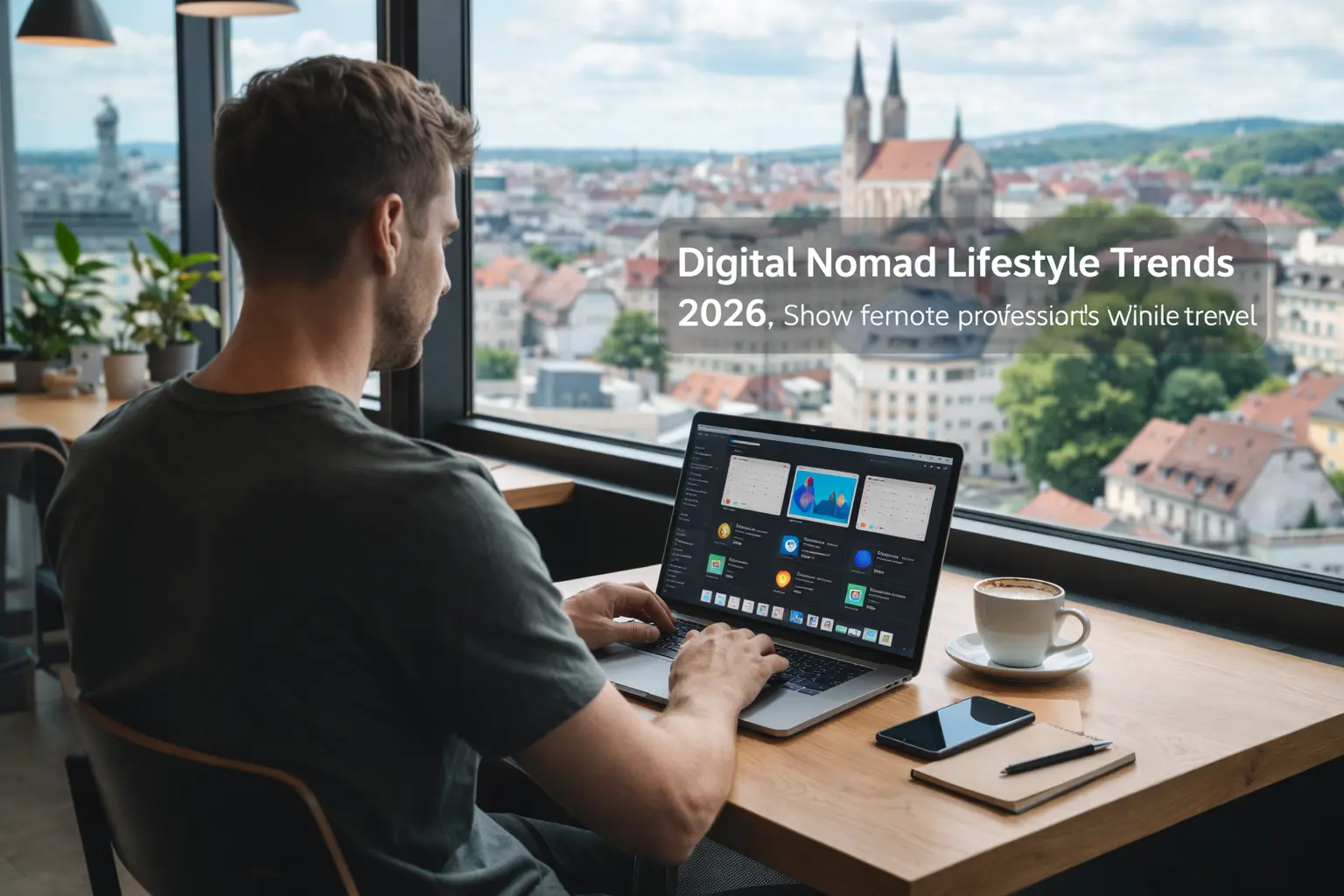
Digital Nomad Lifestyle Trends 2026: The Future of Work, Travel, and Global Living
The digital nomad lifestyle has evolved from a niche movement into a global phenomenon. In 2026, more professionals than ever are combining remote work with travel, flexibility, and cultural exploration. For Germans—known for their efficiency, innovation, and love for travel—the digital nomad trend represents a new way to balance productivity, personal freedom, and global experiences.
This guide explores the most important digital nomad lifestyle trends 2026, key technologies, popular destinations, benefits, challenges, and tips tailored for German remote workers and entrepreneurs.
What Is the Digital Nomad Lifestyle?
A digital nomad is someone who works remotely while traveling or living in different locations. They rely on digital tools such as laptops, cloud software, and communication platforms to perform their jobs from anywhere in the world.
Digital nomads may work as:
- Freelancers
- Remote employees
- Entrepreneurs and startup founders
- Content creators and consultants
In Germany, the rise of flexible work policies, strong internet infrastructure, and global digital platforms has made this lifestyle increasingly accessible.
Why Digital Nomadism Is Growing in Germany
Germany has embraced remote work faster than many European countries, driven by:
- Advanced Digital Infrastructure: High-speed internet and tech adoption.
- Flexible Work Culture: Many German companies now offer hybrid or remote roles.
- Global Freelance Platforms: German professionals can work with international clients.
- Strong Travel Culture: Germans love exploring Europe and beyond.
- Entrepreneurial Ecosystem: Startups and digital businesses are thriving.
Top Digital Nomad Lifestyle Trends 2026
1. Hybrid Nomadism (Part-Time Travel, Part-Time Home Base)
In 2026, many Germans are choosing hybrid nomadism—splitting time between a home base and travel destinations.
Key Features:
- 3–6 months traveling, rest of the year in Germany
- Maintaining social ties and healthcare benefits
- Flexible work contracts
This trend appeals to German professionals who value stability but want global experiences.
2. AI-Powered Remote Work Tools
Artificial intelligence is transforming how digital nomads work.
Popular AI Tools in 2026:
- AI writing and design assistants
- Automated scheduling and project management tools
- Smart translation and voice tools
These technologies help German nomads increase productivity while traveling across different time zones.
3. Rise of Nomad-Friendly Cities in Europe
European cities are becoming hubs for digital nomads, especially for Germans who prefer nearby destinations.
Popular Nomad Cities for Germans:
- Lisbon, Portugal
- Barcelona, Spain
- Prague, Czech Republic
- Tallinn, Estonia
- Berlin and Hamburg (for domestic nomads)
These cities offer coworking spaces, strong internet, and vibrant communities.
4. Remote Work Visas and Digital Nomad Visas
By 2026, many countries have introduced digital nomad visas to attract remote workers.
Benefits:
- Legal long-term stays
- Tax incentives and simplified regulations
- Access to healthcare and banking
Germany-based nomads increasingly use these visas to work legally abroad while maintaining German residency.
5. Coworking and Coliving Spaces
Coworking and coliving spaces are expanding rapidly, offering flexible workspaces and community living.
Key Advantages:
- High-speed internet and office facilities
- Networking with other digital nomads
- Social events and collaboration opportunities
For Germans, these spaces provide structure and social interaction while traveling.
6. Sustainable and Slow Travel
Sustainability is a major trend in Germany, and digital nomads are adopting slow travel and eco-friendly practices.
Examples:
- Staying longer in one location
- Using trains instead of flights within Europe
- Supporting local businesses and eco-lodges
This trend aligns with Germany’s strong environmental values.
7. Health, Wellness, and Work-Life Balance Focus
In 2026, digital nomads prioritize mental and physical health.
Popular Practices:
- Yoga and meditation retreats
- Fitness apps and wearable tech
- Flexible schedules to avoid burnout
German nomads are increasingly integrating wellness into their remote work routines.
8. Remote Entrepreneurship and Online Businesses
Many digital nomads are launching online businesses, including:
- E-commerce stores
- SaaS products
- Online courses and coaching services
Germany’s strong startup ecosystem supports entrepreneurs who want to run businesses while traveling.
9. Smart Travel Tech and Remote Work Gear
Technology plays a crucial role in digital nomadism.
Essential Tech in 2026:
- Lightweight laptops and tablets
- Portable monitors
- Noise-canceling headphones
- Cloud storage and cybersecurity tools
German nomads invest in high-quality gear to maintain productivity on the move.
10. Community and Networking Platforms
Digital nomads are increasingly using online communities and platforms to connect.
Popular Platforms:
- Remote job platforms
- Digital nomad forums and social networks
- Virtual meetups and conferences
These platforms help German nomads find jobs, collaborate, and build friendships globally.
Benefits of the Digital Nomad Lifestyle
1. Freedom and Flexibility
Work from beaches, mountains, or city cafés without being tied to a single office.
2. Cultural Experiences
Experience different cultures, languages, and cuisines while earning income.
3. Career Opportunities
Access global clients and companies beyond Germany.
4. Personal Growth
Traveling and working remotely builds adaptability, communication skills, and independence.
5. Cost Optimization
Living in lower-cost countries can reduce expenses while maintaining German income levels.
Challenges Digital Nomads Face
1. Visa and Legal Issues
Different countries have varying regulations for remote workers.
2. Taxes and Insurance
German tax obligations and health insurance must be managed carefully.
3. Isolation
Frequent travel can lead to loneliness without strong social networks.
4. Time Zone Differences
Working with German clients from distant locations can be challenging.
5. Internet Reliability
Not all destinations have stable high-speed internet.
Tips for German Digital Nomads in 2026
- Plan Taxes and Insurance: Consult a tax advisor for international income rules.
- Choose Reliable Destinations: Prioritize countries with strong internet and infrastructure.
- Use Coworking Spaces: Maintain productivity and social connections.
- Adopt Sustainable Travel: Reduce carbon footprint and travel responsibly.
- Invest in Tech and Security: Use VPNs, cloud backups, and cybersecurity tools.
Future of Digital Nomadism Beyond 2026
The digital nomad movement is expected to continue growing with:
- More companies adopting remote-first policies
- Global remote work regulations becoming standardized
- Advanced AI and automation tools enabling location-independent careers
- Smart cities and digital infrastructure supporting nomads
Germany is likely to remain a leading base for digital nomads due to its strong economy, tech ecosystem, and global connectivity.
FAQs About Digital Nomad Lifestyle Trends 2026
Q1: What are the biggest digital nomad trends in 2026?
Hybrid nomadism, AI-powered tools, digital nomad visas, sustainable travel, and coworking communities are major trends.
Q2: Is digital nomadism legal for Germans?
Yes, but Germans must follow tax laws, residency rules, and visa requirements in other countries.
Q3: Which countries are best for German digital nomads?
Portugal, Spain, Estonia, Thailand, and Bali are popular due to infrastructure, visas, and lifestyle benefits.
Q4: How much does the digital nomad lifestyle cost?
Costs vary by destination, but many nomads reduce expenses by living in lower-cost countries while earning German-level income.
Q5: What skills are needed to become a digital nomad?
Skills in digital marketing, programming, design, writing, consulting, and remote project management are highly востребованы.
Q6: Is digital nomadism sustainable long-term?
Yes, especially with hybrid models that combine travel with a home base, strong planning, and stable remote income.